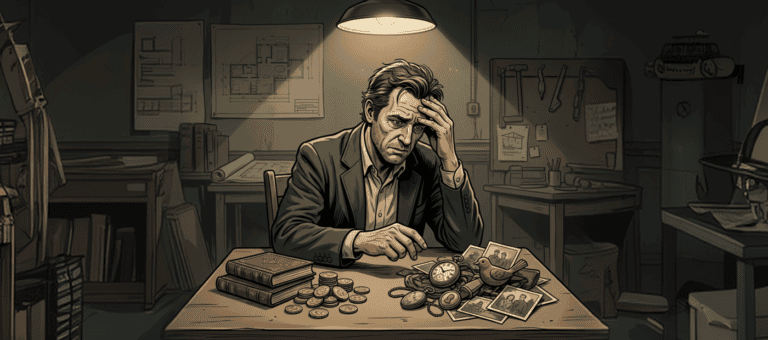
All of us love trading, but let’s be honest – there are moments when it just doesn’t feel like it. Every funded trader eventually faces a situation when they wake up, sit at the desk, pull up the charts, and nothing inside wants to engage. Some traders even say they can feel numb – no fear, no excitement, no urgency – just a dull resistance to clicking the mouse. The next day, the market opens, the account goes live, and one can still feel mentally miles away.
These are the days most trading advice doesn’t address. Not the catastrophic drawdown days or the euphoric winning streaks, but the quiet, emotionally flat sessions when motivation dips, and focus feels forced. For participants in funded trading programs, these days are especially dangerous because of how easy it is to make the wrong decision about participation. On the one hand, you risk skipping too many sessions and losing rhythm, while on the other hand, you might force trades and end up breaking some of the rules.
Navigating these “trading blues” isn’t a soft skill, but a survival skill. Тhis guide will tell you everything you need to know, including the early signs that your motivation is dipping and how to get through those low-motivation days without breaking the funded trading program’s rules.
The Reality No One Talks About: Motivation in Funded Trading Is Not a Constant
As you’ve decided to embark on the journey to becoming a funded trader, or you’ve already passed the evaluation, you might be getting that feeling that you should be ready for action every day. But the truth is, it rarely works like this, and it can often be quite challenging to control how you feel.
Funded traders often mistake low motivation for regression, while, in reality, it’s a biological signal. Markets are a cognitively demanding environment, and it is simply impossible for your brain to operate at peak clarity every day. And you shouldn’t expect it to do so.
For example, one of the most damaging myths in trading is that consistency in performance comes from consistent trading. But it doesn’t – in fact, if you trade just to avoid missing a session, the whole thing can backfire, negatively impacting your performance.
In reality, even professional traders, whether they specialize in futures, equities, or macro desks, can experience significant emotional volatility from day to day. Even seasoned pros can show significant fluctuations in motivation, attention, and risk tolerance, depending on internal and external factors such as sleep quality, recent trade outcomes, personal life, and stress levels.
However, the difference between amateurs and professionals isn’t emotional stability, but emotional management. While the former always think about making money, the latter think about losing it. That mindset is pure realism, acknowledging that trading performance is fragile, especially when internal conditions deteriorate.
So, considering that it can be challenging to control motivation at all times, what the trader can do is to adjust their strategy on days when they are feeling the “trading blues.”
The most common strategy for getting through those low-energy days is playing defense. More precisely, defending yourself from your own expectations. This is especially important for participants in funded trading programs like Earn2Trade’s Trader Career Path® and The Gauntlet Mini™, as well as for traders who are already funded, since they must follow rigid rules. The daily loss limits don’t care how inspired you feel. Nor do the drawdowns adjust based on your motivation.
Why Funded Traders Can Experience “Trading Blues” More Often
At the retail level, traders operate with near-total freedom, choosing when to trade, how much to risk, and when to step away. On the other hand, funded trading removes much of that autonomy in exchange for leverage and opportunity. Risk parameters are fixed, drawdowns are non-negotiable, and daily loss limits don’t care about context. Over time, this transforms trading from an exploratory activity into a compliance-based profession.
Funded traders are at greater risk of motivational slumps than most retail traders, also because the structure of funded trading programs, as well as the rules of prop firms, can subtly reshape how the brain experiences risk, reward, and autonomy. And that is all done with a clear purpose – to instil a more resilient mentality and improve long-term performance.
Evidence from years of psychological research has shown that reduced autonomy can often lead to reduced intrinsic motivation, even when external rewards increase. A trader may be earning more money, yet feel less engaged. In situations like these, the market hasn’t changed, but the relationship with it has.
There is also the issue of repetition. Funded traders often trade the same instruments, at the same time, under the same constraints. And while familiarity breeds efficiency, it can also breed emotional flatness. For example, when nothing feels new, the brain might stop producing the same level of engagement chemicals, and what once felt exciting might begin feeling routine.
What’s important here, however, is that all of this doesn’t mean something is wrong. Instead, it means the trader has entered a more professional phase of the journey where motivation can no longer be relied on as fuel. And that’s precisely the idea of funded trading programs, which are intentionally designed not to reward emotional intensity but stability. The built-in rules also help avoid the dangerous situations when traders misinterpret the normal psychological shift as a personal failing and begin forcing activity to “feel like a trader again.” The bottom line is that situations like these can often lead to overtrading, sloppy execution, and unnecessary rule violations. The sooner traders understand that, the safer their accounts become.

The Most Common Misinterpretation: “If I Don’t Feel Like Trading, Something Is Wrong”
One of the most damaging internal narratives that funded traders fall prey to is the belief that motivation should always be present and, when it isn’t, they assume they are regressing.
This belief is reinforced by trading culture itself. Social media glorifies discipline as relentless action where you “show up every day” and “hustle all the time.” While often well-intentioned, this messaging ignores a critical reality: trading is not a linear task, but a probabilistic, perception-dependent activity that requires mental clarity more than physical attendance.
In his book “Trading in the Zone,” Mark Douglas strongly emphasizes that traders must operate independently of their emotional state. This doesn’t mean emotions disappear entirely, but that they stop dictating behavior. Importantly, it is also worth noting that a lack of motivation itself can’t invalidate your competence. It will simply change the operating conditions.
Understanding this is critical so you can avoid the dangerous mistake many traders make: trying to correct low motivation with force. In doing so, many end up trading excessively to prove commitment and compensate for disengagement. The flawed logic behind this is that “something will click.” But markets don’t reward simply showing up.
On days when motivation is lower, market perception is usually significantly distorted, and reaction time slows. Furthermore, judgment can become mechanical rather than contextual, with traders following rules but also missing nuance. For example, one may end up taking trades that technically qualify but feel slightly off since “that’s what disciplined traders do.”
The truth is – this is how most accounts erode. They do so quietly, through minor, repeated misalignments that wrongly feel harmless in isolation, and not through catastrophic mistakes.
Simply put – remember that low motivation isn’t a warning sign, but misinterpreting it is.
Why Emotional Flatness Can Prove More Dangerous Than Fear
Everything about fear is obvious – you are afraid to lose money and throw your account out of the window. The worst that can happen is to remain passive and miss some trading opportunities until you regain your confidence and get back in the game.
However, emotional flatness is a silent killer. When a trader is feeling the blues, their engagement drops just enough to compromise awareness without triggering caution. They’re not scared, so they don’t reduce risk, and they’re not excited, so they don’t get too aggressive. Instead, they operate on autopilot.
In situations like these, emotional disengagement ends up reducing error detection and situational awareness. In trading terms, this manifests as late exits, delayed invalidation recognition, and missed contextual cues.
In a funded trading environment, these minor errors can add up quickly, driving a trader from neutral to rule violation without ever feeling stressed. Since there is hardly any meltdown, revenge, or overtrading on “boring” days, many traders end up surprised when they breach limits.
Reframing the Day to Overcome the “Trading Blues”: Remember That Trading Isn’t the Only Productive Outcome
The market doesn’t punish inactivity, but it surely punishes poor participation. That is why it is critical to make sure you actually stay on the sidelines when you don’t feel like trading. So, here are a few tips on how to do it.
One of the most important mindset shifts that funded traders can make to get through those “trading blues” periods is redefining how they feel about productivity. Productivity isn’t measured by trades taken, but by decision quality, and some of the highest-quality decisions a trader can make are to be able to refrain from trading when it feels counterproductive. Remember that funded trading isn’t about maximizing action, but about minimizing error.
Acknowledging that there are days when the best trade is no trade can elevate a funded trader’s game massively, including through:
- Reducing stress and pressure to always be “in the game”
- Shifting to a more sustainable operational wisdom
- Improving performance and preserving the funded trading account
- Not sacrificing trading quality for quantity
- Avoiding trading days that don’t reward participation
Don’t blame yourself when you are feeling the “trading blues.”
First, this isn’t something you can control at all times, but a need dictated by your brain, and the best thing to do is listen to it.
Next, if you don’t feel like resting and recharging your batteries, you can use the free time for other productive activities that will elevate your trading performance, such as market observation, journaling, studying structure, and reviewing behavior. These activities will build up your skills without drawing down capital.
Simply put, traders who embrace this broader definition of productivity last longer and perform better over time since the market doesn’t punish inactivity.
A Helpful Tip: Adopting the “Professional Trader’s” Mindset
In his book “Steal Like an Artist,” Austin Kleon cites the American filmmaker and musician, Jim Jarmusch, who says,
Nothing is original. Steal from anywhere that resonates with inspiration or fuels your imagination.
So, let’s steal some strategies on overcoming the “trading blues” from pro traders. For example, professional traders learn to respect flatness the same way they respect volatility spikes. Specifically, they treat it as a condition that requires adjustment, and not denial.
Furthermore, professional traders don’t operate at a single gear, but they constantly rotate between modes based on internal and external conditions. Here are three of the most common modes seasoned pros rely on:
- Execution Mode: This is the trading mode and is reserved only for days when clarity is high, alignment is present, risk parameters are normal, and engagement is strong.
- Observation Mode: This mode allows traders to stay connected with the markets but without exposure. For example, they watch price action, note reactions, track failed moves, and journal behavior. Refining strategies and backtesting new ideas are also common activities promoted by the observation mode. This state is especially valuable, if not mandatory, for low-motivation days.
- Recovery Mode: Think of this mode as a deliberate disengagement necessary when emotional or physical fatigue compromises perception. The recovery mode is crucial for protecting long-term performance by preventing forced participation.
Of these, the Observation Mode is the most important, powerful, and efficient, though often among the least used tools in funded trading. When traders observe without risk, they notice things they usually miss while managing positions, including how price behaves after stops are triggered, how volatility expands or contracts throughout the session, and which breakouts fail quietly instead of violently. That’s why many professional traders intentionally schedule observation days after periods of heavy trading.
The Observation Mode also recalibrates expectations by allowing traders to reconnect with market reality rather than the outcomes they have projected in their heads, which ultimately prevents forced trades.
Try following this framework for a while. It might not work for all of you, but for those for whom it does, it would strengthen the notion that, by not trading, you are choosing the correct professional response.
Practical Tools for Low-Motivation Trading Days
When that low-energy day finally arrives (because, to be honest, it always does), consider adopting the following protocol to ease your mind and protect your account:
- Trade micro contracts only
- Limit trading to one setup
- Cap risk at a lower percentage of daily allowance (e.g., 30%)
- End the session early, regardless of the outcome
- Journal decision quality, not P&L
This structure will impose external discipline when your internal controls are compromised.
Another good strategy is to adjust your behavior based on your mental state. For example, if you feel calm but disengaged, don’t trade – just observe. If you feel slightly unfocused, consider reducing execution. If you are in one of those “emotionally flat” states, make sure only to observe the market or exit altogether. Or if you feel tired or frustrated, don’t trade at all.
To Wrap Up: Don’t Fight the “Low Motivation” Days – Embrace Them
Going forward, you will find out (if you haven’t already) that some days just aren’t for trading or even observing. Physical exhaustion, emotional overload, or personal stress can reduce cognitive bandwidth to unsafe levels. In the case of funded trading, where survival matters more than attendance, stepping away equals capital preservation.
At the end of the day, don’t forget that, while winning days might feel important, it’s the low-motivation ones that determine a trader’s longevity. In fact, a big part of the participants in funded trading programs like Earn2Trade’s Trader Career Path® and The Gauntlet Mini™ actually struggle during the quiet periods. So, going forward, keep in mind that the market teaches the hardest when nothing happens.
If you don’t feel like trading, you’re not failing but simply responding honestly (and also in a mature way) to a demanding environment. While low-motivation days can’t be avoided, your goal is to prepare for them by shifting from an “always-in” approach to one of selective participation. Because often, the most professional trade you can make is the one you don’t.