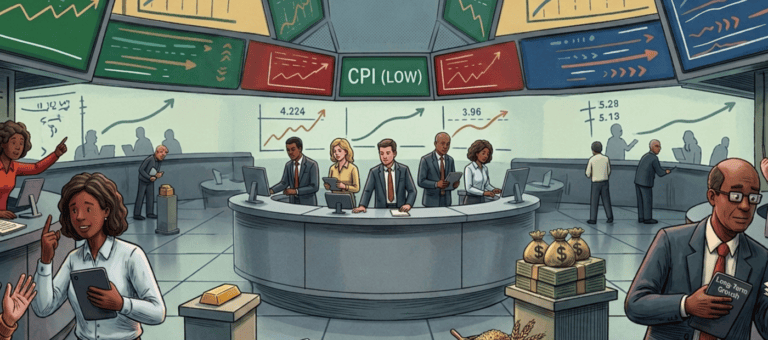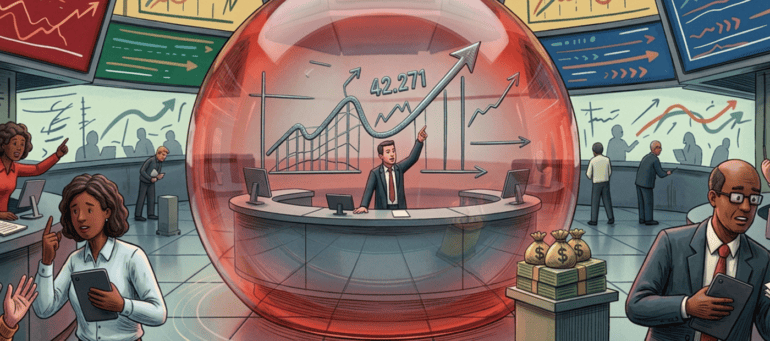
You’ve felt it as a consumer, but as a trader, probably, too – there are times when inflation becomes the main market narrative. For consumers, it presents the challenge of higher prices and reduced purchasing power, while for traders, it can often complicate technical analysis and throw a working strategy out the window.
For funded traders, this environment can be mentally exhausting, as volatility creates the illusion of endless opportunity and makes overtrading increasingly tempting. However, experienced traders understand that not every volatile move is tradable and, most of the time, the potential opportunities are simply noise amplified by uncertainty.
So, the challenge is learning to distinguish meaningful opportunity from emotional chaos and to become part of the traders who not only survive inflationary markets but also thrive in them. This guide aims to help you by diving into the specifics of high-inflation periods, the challenges they pose, and how to make the most of the opportunities they create.
High-Inflation Market Periods: A Quick Overview
There are market environments where technical analysis feels almost effortless – trends respect levels, volatility remains manageable, and economic data acts more like background noise than a market-moving event.
Well, high-inflationary periods are exactly the opposite. The reason is that inflation disrupts the market’s rhythm by altering correlations, distorting valuations, intensifying volatility, and forcing central banks to adopt aggressive macro measures.
The impact on traders? Those who were profitable in calm conditions suddenly find themselves struggling with violent reversals, unexpected macro reactions, and price action that feels erratic even when the setup looked clean.
While high-inflation periods are challenging, they can also open up significant opportunities. For example, Paul Tudor Jones built part of his legendary reputation in his early career by successfully navigating periods of high inflation and extreme volatility, including by trading amid macroeconomic dislocations during the 1970s and early 1980s. Inflation trading laid the foundation for his macro approach and helped build his “global macro strategy,” which has enabled him to earn massive profits during major market crashes and bubbles.
High-Inflation Periods As a Game of Opportunities and Challenges
High-inflation periods create movement – whether it’s commodities exploding, bond markets collapsing, interest rates surging, or entire sectors being repriced, traders willing to adapt have much to work with.
However, at the same time, inflationary periods present a unique challenge for funded futures traders and participants in funded trading programs such as Earn2Trade’s Trader Career Path® and The Gauntlet Mini™.
For example, the volatility that creates opportunity can also quickly destroy accounts, since tight drawdown limits, trailing thresholds, and consistency rules leave little room for emotional decision-making or oversized bets. As a result, success in inflationary environments isn’t about predicting every macro headline correctly, but about understanding how inflation reshapes market behavior and adapting your execution accordingly.
Another thing that makes inflationary periods especially difficult is that they create a constant atmosphere of uncertainty. For example, markets stop reacting solely to earnings or technical levels and begin responding to expectations for the future paths of inflation, interest rates, and economic growth. In practical terms, traders are anticipating rather than just focusing on price.
The bottom line is that this creates a feedback loop where sentiment changes rapidly. One inflation report can completely reverse the market narrative from the previous week. A softer CPI print might trigger a relief rally in equities, while a stronger-than-expected jobs report days later can reignite fears of aggressive monetary tightening.

The Mechanics Behind High Inflation
Inflation is often described rather abstractly – rising prices, declining purchasing power, higher living costs, etc. In the trading field, however, inflation’s primary role is as a liquidity and repricing event.
For example, when inflation rises above central bank targets, markets begin adjusting expectations, and some of the following market developments might take place:
- Interest rates are repriced
- Bond yields move aggressively
- Corporate valuations compress
- Commodity demand changes
- Currency strength shifts
- Consumer spending expectations weaken
Furthermore, the correlation between different asset classes might shift, with events becoming more interconnected. As a result, it is common for inflationary periods to produce stronger cross-market relationships than calmer economic environments.
The U.S. inflation surge between 2021 and 2023 is a perfect example. In 2022, driven by pandemic-induced supply chain disruptions and surging energy and food costs, it reached 7%, while the U.S. CPI peaked at 9.1% in June 2022, a 41-year high. During that period, several events coincided, including the Nasdaq falling over 30% from peak to trough, the FED delivering its fastest tightening cycle since the 1980s, crude oil briefly topping $120 per barrel, and bond markets experiencing historical volatility.
Or let’s take the crisis in the Strait of Hormuz – the oil market disruptions quickly threw global inflation off the rails, ultimately affecting some bond yields. Bond yield shifts then spilled to some equity valuations, and currency markets responded to all three simultaneously. The situation demonstrated how, in today’s market ecosystem, one catalyst can quickly ripple across multiple asset classes within minutes.
What these examples show is that, while inflation serves as the trigger, what matters the most is the market’s reaction to it.
Another important aspect of inflationary markets is that they fundamentally alter liquidity conditions. During periods of aggressive monetary tightening, central banks effectively remove liquidity from the system by raising interest rates and reducing balance sheets. This impacts everything from speculative tech stocks to housing markets and corporate borrowing costs.
For traders, lower liquidity often translates into sharper moves and thinner margins for error. Market participants become more reactive, positioning becomes less stable, and price swings become more violent.
Inflation also tends to expose weaknesses within the economy. Highly leveraged companies struggle with rising financing costs and profit margins compress, while consumers begin reducing discretionary spending. Suddenly, earnings expectations that had looked reasonable in low-rate environments appear overly optimistic, often leading to erratic decision-making across management boards.
Last but not least, inflationary markets can also feel unstable even when economic data appears “strong,” making traders constantly try to determine whether growth can withstand tighter financial conditions.
Inflation’s Impact on Asset Classes
One of the biggest mistakes inexperienced traders make is assuming inflation affects all markets equally. But the truth is, it doesn’t – some sectors benefit from inflation, while others suffer under it.
Historically, commodities tend to outperform during inflationary periods because they are directly tied to physical goods and supply chains. As a result, energy, metals, and agricultural products can often rise alongside inflation expectations.
Growth equities, however, might struggle because higher interest rates reduce the present value of future earnings, which is why technology stocks often come under pressure when inflation accelerates.
Bond markets also behave differently depending on the context. For example, since inflation erodes the real value of fixed-income returns, rising inflation tends to pressure bonds and push yields higher.
Here’s a simplified breakdown:
| Asset Class | Potential Inflation Reaction |
| Crude oil | Bullish |
| Gold | Mixed but often bullish long-term |
| Agricultural commodities | Bullish |
| Bonds | Bearish |
| Growth stocks | Bearish |
| U.S. Dollar | Often bullish initially |
| Defensive stocks | More resilient |
While these are common scenarios, they are case-dependent and might not always unfold that way due to the cause of the high inflation, so make sure to do your own analysis and get informed before jumping the gun.
The truth is, these relationships aren’t always linear, and that is where many traders get confused. For example, gold is often described as an inflation hedge, yet at times in 2022 it struggled despite inflation remaining elevated. Why? Because rising real yields and a strong dollar pressured precious metals.
The same applies to equities since not all stocks suffer equally during inflationary periods. Energy companies, commodity producers, and defensive sectors like utilities may outperform while speculative growth stocks struggle. Meanwhile, companies with strong pricing power might prove more resilient because they can pass rising costs onto consumers.
However, all this shows that there are rotational opportunities for futures traders. Understanding which markets benefit from inflationary pressure enables traders to align with stronger flows rather than fight them. Another important thing to keep in mind is that markets don’t react just to inflation itself, but to expectations of policy responses.
Last but not least, it is worth noting that inflation isn’t just a macro problem, but it can also be viewed through the lens of being a source of directional movement. So, the two cents for futures traders – inflationary environments reward traders who think in terms of capital rotation rather than isolated setups. In that sense, instead of forcing trades in weak markets, it is critical to follow strength (e.g., if commodities are attracting institutional flows while bonds are collapsing, that tells you something important about where the market believes inflation is heading).
The Central Bank Factor: Why Fed Decisions Might Become Everything
During periods of low inflation, central bank meetings often fade into the background. However, during high inflation stretches, they become the market, as every speech, CPI report, employment release, and interest-rate decision suddenly carries amplified importance. The reason is that traders are trying to answer one single question: “How aggressive will the central bank become?”
When inflation remains elevated for too long, policymakers are forced into increasingly aggressive action to restore confidence in price stability. Markets understand this, which is why every economic release suddenly becomes a referendum on future rate policy.
Just a phrase from the Federal Reserve chair can move equity indices, bond yields, the dollar, or commodity markets simultaneously. Since the market narrative constantly shifts in response to expectations about monetary policy, inflationary periods can often feel exhausting.
This creates a highly reactive environment where expectations can shift violently from one week to the next. For example, traders may initially celebrate signs of economic resilience, only to reverse course once they realize strong data could justify additional rate hikes. Good news becomes bad news, and weakness becomes bullish because it suggests future easing. This inversion can easily confuse inexperienced traders because traditional relationships no longer behave as they normally do.
In a nutshell, markets aren’t reacting emotionally but repricing future liquidity conditions. For funded traders or participants in funded trading programs such as Earn2Trade’s Trader Career Path® and The Gauntlet Mini™, the goal shouldn’t necessarily be to predict every announcement correctly, but to manage exposure intelligently.
How Inflation Changes Trader Psychology
When inflation rises sharply, uncertainty rises alongside it, as central bank decisions become harder to predict, economic forecasts become less reliable, and consumers and businesses adjust expectations constantly, often in unpredictable ways. That uncertainty spills directly into trading behavior, with many reacting emotionally to shifting macro narratives, driving volatility higher. In such highly uncertain periods, even if one inflation report comes in softer than expected, markets can start rallying aggressively, or vice versa.
Traders who become emotionally attached to a single narrative often struggle during inflationary cycles because macro conditions change too quickly. And the thing is that inflationary markets reward adaptability far more than conviction. At the end of the day, inflationary periods cause volatility spikes, and volatility magnifies both opportunity and risk.
Less-experienced funded traders can struggle with the psychological pressure and emotional stress of remaining compliant. As a result, they can be thrown into two dangerous extremes – overtrading due to increased opportunity or decision paralysis due to increased uncertainty. The truth is that neither works, and the key is in remaining balanced – staying active enough to capitalize on movement while remaining disciplined enough to survive the volatility.
Inflationary environments also intensify emotional recency bias (check our dedicated guide for more info). Traders begin overreacting to the latest data release or market move because volatility makes every event feel decisive. After several strong bullish sessions, traders assume the market has bottomed, and, after a sharp selloff, they become convinced a crash is imminent.
This emotional instability is also amplified by modern financial media. Headlines become increasingly dramatic during inflationary periods because fear attracts attention. Traders are bombarded with predictions of recessions, stagflation, market crashes, and central bank policy shifts, which result in cognitive overload. As a result, many stop trading their system and start trading headlines.
Professional and experienced traders, on the other hand, believe that emotional flexibility is a competitive advantage in inflationary environments. They also understand that inflationary markets are inherently emotionally charged, which means discipline becomes more valuable (not less). They reduce unnecessary noise, focus on high-quality setups, and avoid becoming emotionally attached to macro opinions.
Why Futures Traders Have an Advantage During Inflationary Periods
Ironically, futures traders often end up better positioned for inflationary environments than long-term investors since futures markets thrive on movement and inflation creates exactly that (e.g., larger daily ranges, short-lived trends, increased volatility, and faster reactions to economic data).
While investors may struggle during inflationary cycles as portfolio valuations compress, active futures traders can capitalize on directional momentum (either way). This is particularly true in energy, interest rate, currency, and commodity futures markets.
Take crude oil futures as an example. During inflationary periods driven by supply disruptions or geopolitical instability, oil markets often experience sustained directional moves alongside elevated intraday volatility. While that environment can surely be difficult emotionally, it is also highly tradable structurally.
The same applies to Treasury futures. Inflation-driven repricing of interest rates can create major moves in bond markets as expectations around Federal Reserve policy shift rapidly.
What gives futures traders a unique edge during inflationary periods is flexibility. Unlike traditional investors who may be trapped in long-only portfolios, futures traders can adapt quickly to changing macro conditions and go long commodities during inflation spikes, short bonds during rate-repricing cycles, or trade currency strength when global capital flows shift. This flexibility becomes incredibly valuable when markets transition rapidly from one narrative to another.
It is also worth noting that inflationary periods tend to create cleaner macro-driven trends. During low-volatility environments, markets often drift sideways or become heavily dependent on company-specific catalysts. However, when inflation dominates the narrative, broader themes emerge (e.g., central bank policy, energy prices, and interest-rate expectations begin driving entire sectors).
Ultimately, this can simplify decision-making. Instead of focusing on dozens of disconnected variables, traders can align themselves with dominant macro flows. If inflation is accelerating and bond yields are rising, certain trades naturally become higher probability.
However, this advantage exists only if traders remain disciplined, as volatility can easily create the illusion that every move is an opportunity, whereas, in reality, inflationary markets require greater selectivity. In fact, for funded traders, however, the advantage of high-inflation periods comes with a caveat: volatility cuts both ways, and you’re not just trading a bigger opportunity, but also a bigger risk. In the next section, we will explore practical tips and strategies for finding the right balance.
Practical Strategies for Trading Inflationary Markets
While there isn’t a uniform strategy that works best during high-inflation periods, there are multiple strategies that you can try out to see which fits your particular situation best, depending on the context you are operating within.
1. Focus on Macro Alignment and Watch Real Yields
Inflationary periods reward traders who understand broader themes. That’s why a good strategy is to ask yourself some questions before jumping into trades, such as:
- Is inflation rising or cooling?
- What is the bond market pricing in?
- How is the dollar reacting?
- Are commodities confirming the move?
These can validate your idea, as cross-market confirmation is usually invaluable in inflation-driven environments. So, the more factors align, the stronger the case for making the particular trade. On the other hand, if there are conflicting signals, it is often better to err on the side of caution and avoid trading until the situation clears. Remember – protecting capital first, growing it later.
Also, keep an eye on inflation-adjusted yields, which often provide insight into broader market direction. Also known as “real yields,” they can indicate when growth stocks struggle, the dollar is strengthening, or risk appetite weakens.
2. Trade Smaller Than You Think You Need To
Professional traders understand that surviving volatile macro environments is part of the edge, which is why the best trade during inflationary uncertainty is often a smaller size. Sometimes it’s no trade at all.
This sounds counterintuitive because volatility creates excitement, but, in reality, inflationary markets punish oversized positioning. On the other hand, a smaller size keeps you psychologically flexible. Furthermore, if you opt for reducing size, you can expect various benefits, such as:
- Improved emotional control
- Better execution quality
- Drawdown stability
3. Avoid Trading Every Data Release and Focus on the Market’s Interpretation
The traders who perform well during high-inflation periods are usually those who focus less on predicting central banks and more on observing how markets interpret new information, since price reactions matter more than opinions.
Also, note that while volatility can sometimes be an opportunity, it’s often pure chaos. So, in that sense, not every inflation report needs to be traded. And if your edge doesn’t specifically involve news trading, waiting for post-news structure is often smarter than gambling on the release itself.
That way, you will have the needed room to focus on the market’s interpretation and not jump the gun prematurely.
4. Respect Correlation Shifts
Note that inflation can disrupt market relationships, and assets that normally move together may diverge unexpectedly. Since correlations can become less stable during high-inflation periods, adaptability starts to matter more than assumptions.
Another thing to keep in mind is that inflationary environments can create information overload because every asset class suddenly reacts to macro headlines. As a result, a useful practical adjustment is reducing the number of markets you actively monitor. Since trying to trade everything often leads to scattered focus and poor execution, professional traders usually narrow their attention during such periods, specializing in a few highly liquid instruments where they understand the behavior deeply.
Journaling also becomes especially important during inflationary cycles (here are useful tips for doing it properly). Tracking how you respond emotionally to volatility can reveal patterns that are difficult to notice in real time – for example, many traders discover they become overly aggressive after major CPI moves or excessively cautious after sharp reversals. These observations matter since inflationary markets amplify emotional tendencies and can turn small behavioral flaws into larger problems under stress.
5. Prioritize Volatility Adaptation
Most traders approach inflationary markets the wrong way by trying to predict every macro headline, every Federal Reserve decision, every CPI print, etc. However, inflation trading isn’t about prediction but about adaptation and understanding how it reshapes correlations, liquidity, central bank behavior, trader psychology, and volatility.
That’s why focusing heavily on direction during inflationary periods isn’t the best strategy. Instead, note that volatility management matters even more than directional accuracy, since inflationary markets can dramatically expand ranges.
For example, a stop-loss that worked perfectly during low-volatility conditions can suddenly become useless, and what looked like a normal pullback six months ago can now become a violent intraday swing.
Note that high-inflation periods can trigger volatility spikes, which, in turn, can threaten your capital preservation goals. So, to avoid getting trapped, don’t use the same position sizing and stop placements – instead, adjust based on volatility conditions. For example, when volatility surges, try:
- Reducing size
- Widening stops strategically
- Lowering trade frequency
- Focusing on high-conviction setups
- Avoiding emotional overtrading
Also, bear in mind that inflationary periods force traders to become more dynamic. However, this doesn’t mean abandoning your working structure entirely, but understanding that its risk parameters should evolve alongside volatility conditions. In that sense, adaptation also means recognizing when your existing strategy no longer fits current market conditions (e.g., some strategies thrive in trend-driven, inflationary markets, while others struggle because prices become too volatile or news-sensitive).
A trader using tight mean-reversion setups in an environment dominated by macro momentum may repeatedly get stopped out, not because the strategy is inherently flawed, but because the environment has changed.
Inflationary Periods Can Open Up Growth Opportunities, but Consider Them a Breathing Space as Well
Ironically, some of the most difficult market environments produce the greatest long-term development since they put your foundational skillset to the test, including risk management, emotional control, macro awareness, position sizing, and adaptability. While calm markets can hide flaws for months, inflationary markets can expose them in days.
There’s a reason many legendary macro traders were shaped during volatile economic periods. Difficult environments accelerate learning by quickly exposing weaknesses and providing traders with immediate feedback on their performance. And while inflationary markets eventually pass and volatility normalizes, the lessons learned during those periods stay with traders permanently. In that sense, a trader who survives high-inflation volatility with discipline often emerges significantly stronger because they’ve learned how to operate under pressure.
However, note that if this pressure becomes too much, there is no shame in sitting out. In fact, one of the biggest misconceptions in trading is that activity equals productivity. Yet, if we look more closely, we will see that the funded traders who survive inflationary environments are often not the ones making the biggest gains, but rather those avoiding catastrophic mistakes while slowly compounding in high-quality conditions. And that’s exactly what funded trading programs like Trader Career Path® and The Gauntlet Mini™ teach you.